
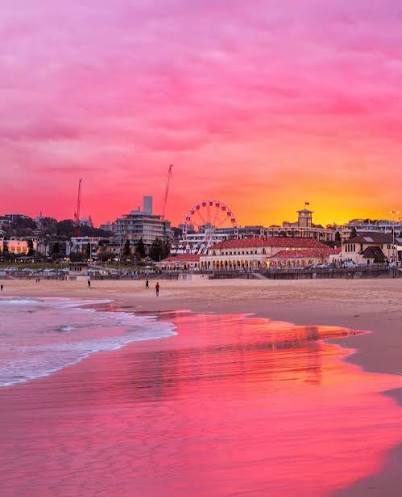
Tomorrow is the only appointment that never cancels.
Everything else in life can be postponed, rescheduled, avoided, or lost entirely. Relationships drift. Projects stall. Health deteriorates and recovers and sometimes does not recover. Opportunities arrive and disappear before you have finished deciding what to do with them.
But tomorrow comes. Reliably. Without asking for your permission or your readiness. Without caring whether you deserve it or whether you have done enough to earn it. It simply arrives, at the same time it always does, and places itself in front of you with the same quiet question it always asks.
What are you going to do with this?
Happyologism
I want to introduce a word. I invented it, so you will not find it in any dictionary. That is precisely the point.
Happyologism.
It is not the study of happiness in the academic sense. It is not positive psychology dressed in new clothing. It is something simpler and more radical than either of those things.
It is the active, deliberate, sometimes stubborn choice to orient yourself toward what is possible rather than what is wrong. To wake up and decide — before the phone is checked, before the news is consumed, before the first problem of the day presents itself — that today has potential. That something good is available in it. That the darkness is real but it is not the whole story.
This is not naivety. I want to be very clear about that.
I have built businesses through crises. I have made decisions with consequences that kept me awake. I have sat with real uncertainty — not the comfortable kind that motivational speakers describe from a stage, but the kind that arrives at three in the morning with no reassuring answer attached. I know what the dark version of things looks like.
And I am still arguing for happyologism. Not instead of that reality. Alongside it.
What negativity actually costs
We have normalised a very strange relationship with darkness.
We consume it voluntarily, in enormous quantities, every single day. We scroll through it before we get out of bed. We discuss it over breakfast. We carry it with us into our work, our relationships, our decisions. And we call this being informed. Being realistic. Being serious about the world.
But there is a difference between understanding that the world contains darkness and choosing to live inside it as your default setting. Between being clear-eyed about difficulty and being so saturated with it that you have lost the capacity to see what is also true: that alongside every crisis, every failure, every reason for despair, there is also something being built. Something being repaired. Something beginning.
Negativity is not more intelligent than optimism. It only feels that way because we have been trained to associate critique with sophistication and hope with innocence. But hope is not innocent. Real hope — the kind that persists through the evidence rather than despite it — is one of the most rigorous and demanding positions available to a thinking person.
It requires you to hold the full picture. The darkness and the light. The problem and the possibility. The honest assessment of where things are and the refusal to let that assessment become the ceiling of what is imaginable.
The alarm clock nobody sells
The most effective alarm clock I have ever found does not make a sound.
It is the decision, made the night before or the moment after waking, to approach the coming day as an open question rather than a predetermined verdict. To not decide before you begin that today will be like yesterday, that the problem will remain unsolved, that the people around you will disappoint you, that the effort will not be worth it.
To leave it open.
That openness — that willingness to be surprised by what the day actually contains rather than confirmed in what you already expect — is the practical expression of happyologism. It does not require you to be cheerful. It does not require you to pretend. It requires only that you do not close the door before you have walked through it.
The people I have respected most in my life — in business, in teaching, in the moments that actually mattered — were not the ones who were never afraid or never uncertain. They were the ones who were afraid and uncertain and still got up. Who had every reason to be cynical and chose not to be. Who understood that the world was difficult and decided to engage with it anyway, fully, without the protective distance that cynicism provides.
They were, in the most precise sense, happyologists. They just did not call it that.
Tomorrow as philosophy
There is something philosophically significant about tomorrow that I do not think we pay enough attention to.
Tomorrow is the only place where change is possible. Yesterday is fixed. Today is already happening. But tomorrow — tomorrow is still open. It has not yet been determined by the decisions you made, the failures you accumulated, the version of yourself you presented to the world this week.
Tomorrow is where the different choice lives. The conversation you have not yet had. The idea you have not yet tried. The version of the situation that looks completely different because you approached it from a different angle, at a different moment, with a different question.
This is not escape from reality. It is the most realistic thing I know. Because reality is not static. It changes. And the people who understand that tomorrow genuinely contains something that today does not are the ones who are positioned to meet it when it arrives.
The others are still arguing with yesterday.
A simple and balanced life
I am not advocating for a life without weight. Weight is part of it. The things that matter carry it.
What I am advocating for is a life in which the weight is balanced by something. By the knowledge that you have done what you could today. By the recognition that the people around you — imperfect, complicated, sometimes infuriating — are also trying. By the small, reliable pleasures that do not ask much of you and give back more than they cost.
A coffee before the world starts. A ride. A conversation that goes somewhere unexpected. A moment where something clicks and you understand something you did not understand before. The quiet satisfaction of a problem that stayed unsolved for weeks and then, on an ordinary Tuesday, suddenly was not.
These things do not solve the large problems. They do not make the darkness disappear. But they are real. And they are available. Every day, in some form, they are there.
Happyologism is simply the practice of noticing them. Of not letting the noise of everything that is wrong drown out the signal of everything that is also, quietly, right.
Tomorrow is coming.
It is the only appointment that never cancels. The only reset that arrives without being asked. The only place where the story is still being written.
Show up for it.
Ricardo Jovani is a professor at Geneva Business School Madrid, founder of Jolufoods S.L., author of The TriCore Method and the forthcoming 2+2 Is Never 4, and a TEDx speaker.
Leave a Reply